
Transfer HabitKit To A New iPhone Or Android Phone
By Sebastian Röhl, creator of HabitKit
5 min read Published Updated Instructions for HabitKit 1.18.0
HabitKit does not automatically sync changes between phones. A manual export gives you a copy you can transfer yourself. You export a file from the old phone, get it across however you like, and import it on the new one. That works in both directions, including from iPhone to Android and back.
You need Pro for export and import. Keep the old phone and a separate copy of the export until you have checked the new phone. Import replaces the destination’s existing habit data; app settings and widgets must be set up again.
On this page
Transfer Your Habits With An Export
You need HabitKit Pro on both phones for this. Export and import are both Pro features in the current release.
- On the old phone, tap the gear at the top left of the overview to open Settings. Under App, tap Data Import/Export.
- Tap Export. On iOS the system share sheet opens. On Android you get a save-file dialog. Either way the file is called
habitkit_export.json. - Get the file onto the new phone by whatever route suits you: AirDrop, Files, Google Drive, email, a cable. HabitKit does not care how it arrives, only that you can pick it in a file browser at the other end.
- On the new phone, install HabitKit, open Settings, and tap Data Import/Export.
- Tap Import, choose the file, and confirm. The dialog reads "Do you really want to import this backup? This deletes all other data so far." On a fresh install there is nothing to delete, so this is the harmless case.
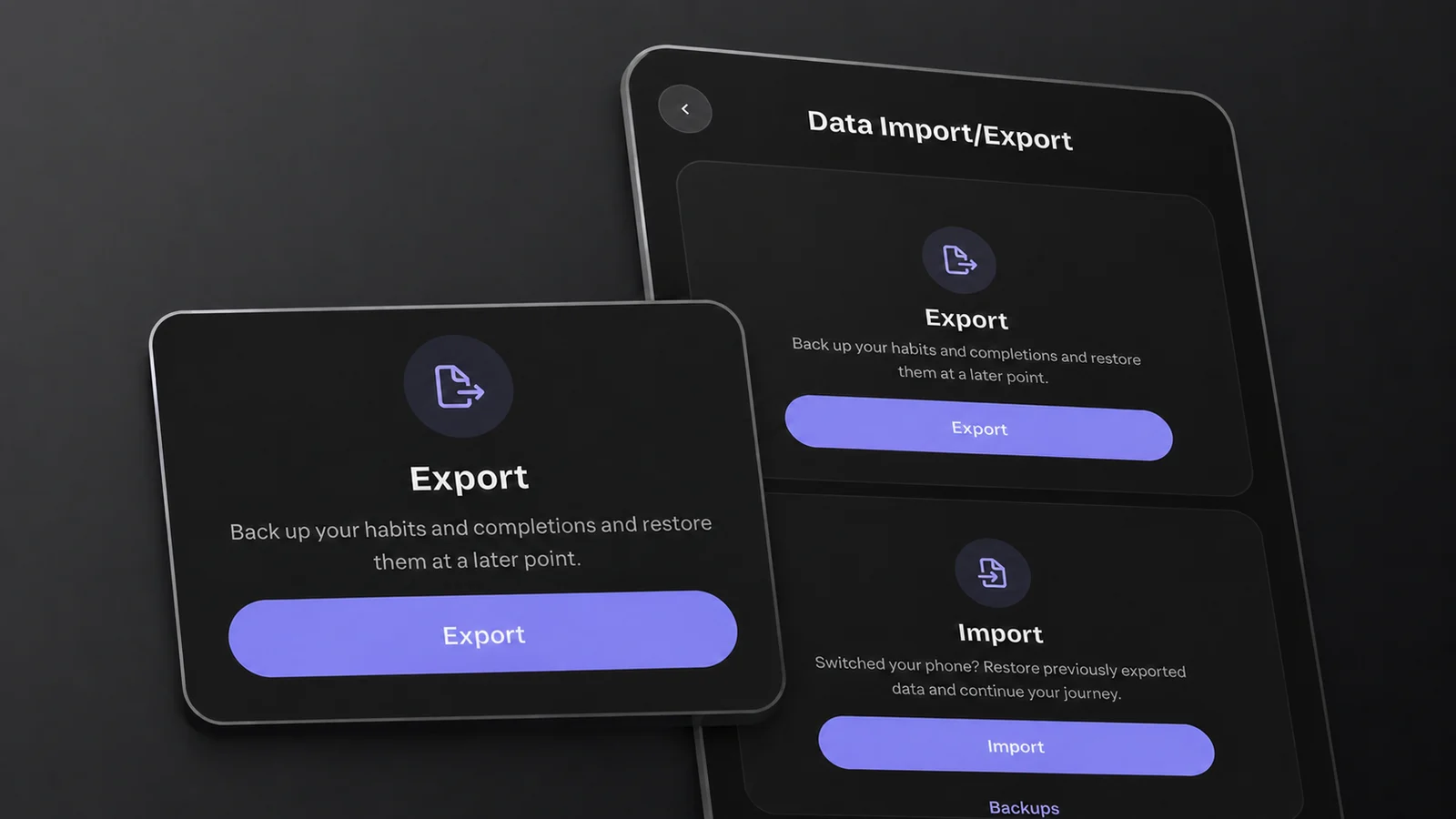
Use Export on the old phone, then Import on the new phone.
An import that fails is meant to leave your existing data untouched, and the message it shows tells you whether it managed that. Export and import your habit data explains the three outcomes you can see and what each one means.
HabitKit Does Not Sync
Your working history is stored on your phone. HabitKit does not keep two devices in sync. On-device snapshots, a system phone backup and a manual export can provide separate copies, but they do not keep changes flowing between installations.
That has one consequence worth stating plainly. Two devices means two independent copies. There is no merge. Importing on a device replaces everything on that device with the contents of the file, so if you tick a habit on the tablet afterwards, the phone will never learn about it.
What Is Left Behind
The file carries your habits. It does not carry your preferences.
- Every app setting stays behind. Theme, Week Starts On, language, the dashboard toggles, the compact list options and your Daily Check-In Reminders configuration are not in the export at all. Open Settings on the new phone and pick them again. Nothing warns you, which is why people notice a week later.
- Habit-level detail does come across. Names, descriptions, icons, emoji, colours, the order you arranged them in, archived habits, every completion with its amount and note, your goals, habit types, measurement units, per-habit reminders, and your categories.
- Home screen widgets have to be rebuilt. A widget is platform state, not app data. Add them again on the new home screen and choose which habits each one shows.
- Pro is a separate transfer. On the same platform, sign in to the store account you bought it with and restore the purchase if needed. Across platforms it is manual, because a purchase made on one store cannot be seen by the other. Restore a Pro purchase covers both cases, and what HabitKit Pro unlocks lists what you would be without.
iCloud Restores On iPhone
An iCloud or Finder device backup may bring HabitKit’s app data and on-device snapshots to the new iPhone. This depends on the device backup containing that data.
This is Apple’s device backup mechanism, separate from HabitKit. Export a file before switching as well, and keep it until you have checked your history on the new phone.
Google Restores On Android
Current Android cloud-backup rules exclude the live database and keep HabitKit's JSON backup snapshots. After a Google restore, the overview may be empty even though those snapshots have arrived. Open Settings › Data Import/Export › Backups and look for a dated backup to restore. Android 12 and later use separate rules for direct device-to-device transfer, which can also carry the live database.
Device backup availability depends on your phone and its backup settings. Export before switching phones so you have a separate copy you can choose yourself. Automatic backups, and how to restore one explains how to restore an on-device snapshot.
Related Questions
Can I Use HabitKit On My Phone And My Tablet At The Same Time?
Not as one synced account. You can install the app on both and import the same file into each, but from that moment they are two separate copies that never talk to each other. A completion logged on one device does not appear on the other, and there is no way to merge them later.
Will An iCloud Backup Bring My Habits Over?
It may, if the device backup includes HabitKit’s data. Export a file before switching as well, then check your history on the new phone before removing anything from the old one.
Do My Settings Come With The File?
No. The export holds habits, completions, notes, goals, reminders and categories. Theme, Week Starts On, language, the dashboard toggles and the Daily Check-In Reminders setup are not in it, and have to be chosen again on the new phone.